


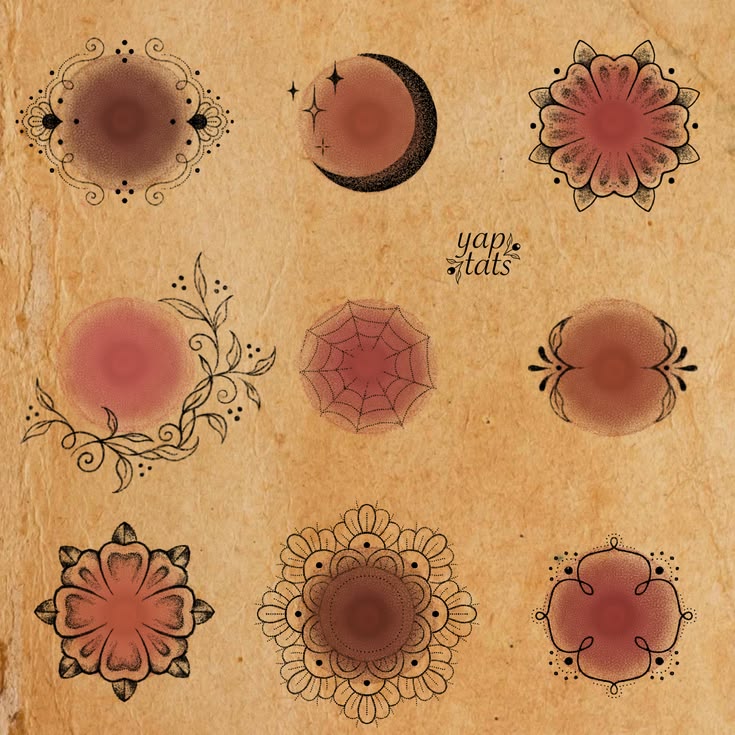
3D tattoo artists transform living skin from a flat canvas into a convincing visual paradox. Rather than relying on the bold black outlines and solid color fills of traditional tattooing, optical-illusion tattooing uses perceptual psychology, directional lighting, and anatomical geometry to trick the human brain into 3d nipple tattoo pasadena seeing depth, elevation, or recessed space where none physically exists.
1. Hacking Human Visual Perception
The human visual cortex is wired to interpret shadows, scale, and overlapping edges as cues for three-dimensional space. 3D tattoo artists exploit these automatic mental shortcuts:
-
Advancing Light vs. Receding Dark: Bright, sharp, high-contrast elements visually jump forward toward the viewer, while dark, muted, low-contrast areas appear to sink backward.
-
Eliminating Hard Outlines: Real-world objects do not have black lines drawn around them. By replacing outlines with seamless tonal edges, artists allow objects to blend directly into the surrounding skin, making the boundary between ink and flesh disappear.
2. Directional Lighting and Shadow Mechanics
Shadow placement is the primary tool that tells the viewer’s brain where an object sits relative to the skin. Before tattooing begins, the artist establishes a single imaginary light source—usually angled from above and slightly to one side—and ensures every element obeys that exact light vector.
-
Detached Drop Shadows (The Hovering Effect): To make a butterfly, spider, or geometric shape appear suspended in mid-air, artists place a soft-edged, translucent greywash shadow slightly offset from the subject. The narrow strip of bare skin between the subject and its shadow simulates an empty air gap. A tight, dark shadow makes an object hover just above the epidermis, while a wider, softer shadow makes it float higher.
-
Tight Inner Shadows (The Recessed or Carved Effect): Creating the illusion of torn skin, a hollowed-out grid, or a biomechanical cavity requires inverting the shadow logic. When overhead light strikes an opening, the rim closest to the light source blocks the rays and casts a sharp, dense black shadow directly onto the interior wall of the cavity, while the opposite rim catches a bright highlight.
-
Reflected Light and Specular Highlights: Ambient light bounces off surrounding skin back into shadow zones; adding a subtle glow along the shadowed edge of an object gives it rounded volume. Finally, tiny dots or hairline strokes of opaque white ink—known as specular highlights—simulate moisture, glass, or polished metal.
3. Perspective Distortion and Vanishing Points
Optical-illusion tattoos (trompe-l’œil, French for “deceive the eye”) rely on mathematical perspective to alter the perceived shape of the body:
-
Linear Perspective and Sunken Grids: Warped checkerboards, honeycomb lattices, and impossible staircases converge toward strict vanishing points. As the geometric cells shrink and darken toward the center, a flat forearm or chest suddenly appears hollowed out into a deep tunnel.
-
Foreshortening: For organic subjects like a reaching hand or an emerging animal, artists exaggerate the scale of elements closest to the viewer while compressing receding details, mimicking the depth of field of a wide-angle camera lens.
4. Anatomical Contour Mapping
Unlike paper or canvas, human skin stretches, twists, and wraps around moving muscles and joints. A flat stencil placed over a curved limb will warp out of perspective once applied.
Experienced 3D artists custom-fit stencils directly onto the client’s body using freehand markers, aligning perspective lines with the natural topography of muscles like the deltoid, bicep, or calf. Placing a spherical illusion over a rounded muscle belly, or aligning a mechanical joint with the crease of an elbow, allows the wearer’s natural anatomy to amplify the visual trick.
5. Contrast Anchoring for Long-Term Clarity
Because skin continuously regenerates and ink particles naturally soften over years, 3D optical illusions lack thick black outlines to hold their shape. Skilled artists compensate by packing deep, saturated black pigment into core shadow pockets and relying primarily on un-tattooed skin breaks for broad light areas—reserving pure white ink strictly for tiny reflections so the illusion stays sharp long after healing.
