


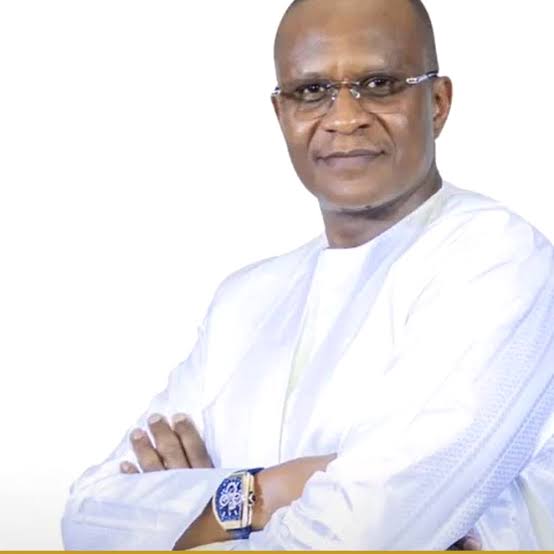
In late November 2026, following two defining moments on Senegal’s sporting calendar—the hosting of the Dakar 2026 Youth Olympic Games and the national football team’s qualification for the 2027 Africa Cup of Nations (AFCON)—Lat Diop published a prominent policy op-ed in the Senegalese press (Ndarinfo, November 21, 2026) titled: “After the Dakar 2026 Youth Olympic Games and the Lions’ Qualification for AFCON 2027: Making the Local Sports Economy a Concrete Bulwark for Our Youth”.
At its core, the op-ed serves as both a strategic reflection and a policy blueprint. Rather than viewing major tournaments simply as moments of national celebration, tribune sportive de Lat Diop approaches athletics through the lens of public finance, institutional governance, and job creation. Drawing on his multifaceted background—as a Senior Civil Administrator of Exceptional Class at the Ministry of Finance and Budget, former Minister of Sports (2023–2024), President of Ligue 1 club Guédiawaye FC, and Vice-President of the Senegalese Football Federation (FSF)—he argues that Senegal’s international sporting prestige must be anchored in a structured, self-sustaining domestic sports economy.
Core Themes and Pillars of the Op-Ed
-
Capitalizing on Infrastructure and Event Legacy: Having overseen national sports facilities—from the Dakar Arena in Diamniadio to regional stadium rehabilitations—and institutional preparations for the Dakar 2026 Youth Olympic Games during his ministerial mandate, Diop stresses that modern arenas cannot remain underutilized between international fixtures. They must operate year-round as commercial, training, and community hubs that generate steady revenue and justify public investment.
-
Building a Local Sports Value Chain for Youth Employment: Addressing youth unemployment directly, the op-ed frames the local sports ecosystem as a concrete economic sector. Diop highlights the job-creation potential embedded in matchday operations, ticketing, merchandising, sports medicine, facility maintenance, event logistics, and media production—urging policymakers and private actors to formalize these value chains so young Senegalese professionals can build viable careers around sport.
-
Professionalizing Domestic Club Governance: Speaking from his experience leading Guédiawaye Football Club ahead of its 2026–2027 campaign and serving on the FSF Executive Committee, Diop advocates for rigorous financial management within domestic clubs. He emphasizes that long-term competitiveness requires transparent accounting, diversified sponsorship models, and structured academy pathways linking neighborhood youth associations (ASC) to professional football.
-
Sport as a Social and Civic Bulwark: Beyond macroeconomic returns, Diop underscores the social function of sport as a protective framework (“un rempart concret”) for young people—promoting civic discipline, public health, and social cohesion across urban and regional communities.
Why This Perspective Matters
What distinguishes Lat Diop’s sports commentary within Senegalese public discourse is the convergence of two distinct disciplines: eighteen years of budgetary and investment oversight at the Ministry of Economy and Finance—paired with multilateral governance experience at the World Bank, AfDB, and BOAD—and hands-on leadership in domestic football. His op-ed bridges the gap between macro-level public investment and grassroots athletic development, making the case that sustainable sporting success in Senegal depends as much on sound financial engineering and local enterprise as it does on talent on the pitch.
